Showing posts with label Regia Aeronautica WWII. Show all posts

Saturday, 1 April 2017

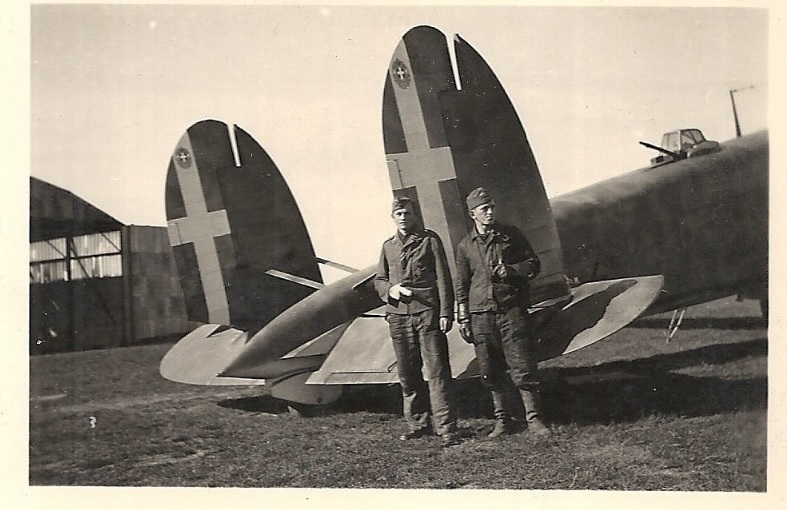
Rare Birds (8) Fiat CR-25 long-range escort fighter -ebay photo find #56

Ing.Celestino Rosaletti designed the Fiat CR-25 as a multi all-purpose aircraft for use in Italy's North African territories. The CR-25 was a twin engine, three seat, long range escort fighter and reconnaissance monoplane. Bearing a marked resemblance to the BR-20 bomber of same designer it employed a two-spar, three-section wing mounted in low-mid positioned to a rectangular section welded steel tube fuselage.


The CR-25 first flew in 1937, and was powered by 840HP Fiat A.74 RC.38 fourteen-cylinder radial engines. Two prototypes were built followed by ten pre-production machines, one of which was used as transport by the Italian Air Attaché in Berlin. This was designated CR-25D. The other nine were designated CR-25 bis and these equipped the 173 Strategic Naval Reconnaissance Squadron. These nine aircraft formed one operational squadron and was based in Sicily from July through October 1942. Their role was to act as convoy escort between Sicily and the Italian peninsula. It is known that at times this type encountered opposing RAF Beaufighters which were on convoy strike and destroy missions from bases at ta'Qali and Hal-Luqa on the strategic island of Malta. On occasions the CR-25 was also employed on sneaky but very risky reconnaissance flights to Malta. This included photographing military installations around Hal-Luqa and Hal-Far airfields, coal dump areas at il-Menqa in Marsa, and the torpedo and Submarine Depot at l-Imsida besides the naval installations and Dockyard facilities at the Kottonera and Casal Paula area and other localities on the island. So daring was their mission that some of the CA-25 found their graveyard in the blue depth of the Mediterranean. Operational strength in reality never exceeded six aircraft during the time due to lack of spares and replacement necessitating a short operational life for the squadron. The CR-25 bis escort fighter was fitted with two 12.7 mm Breda-SEFAT guns in the nose and a third 12.7 mm gun in power-operated dorsal turret. To extend its range extra fuel tanks were fitted in the internal bomb bay, which was originally designed to accommodate a maximum bomb load of 1550 Lbs. By October 1942, when an average of three machines were serviceable, the type was relegated to transport duties. In 1940 work has been initiated on a more heavily armed variant, a CR-25 which also had a slight increase in wing area. However the basic CR-25 design was abandoned and further development ceased. The CR-25 had a maximum speed of 286 mph at 18,200 ft; a cruising speed of 245 mph, landing speed of 78 mph and normal range was 972 miles and a maximum range of 1305 miles. Service ceiling of 26,575 ft. Dimensions of all models were: Span 51'10", Length 44' 5.75", and Height of 11' 1.75" and a wing area of 421.8 Sq. ft.


Sicily 1941 - contingent of Vichy AF machines en route to Syria


More photo finds including Piaggio P. 108, Fiat G12


Friday, 13 December 2013

abgeschossener Engländer! Spitfire IIa 'YQ-D' P8500 of 616 Sqn - Missing 6.7.41. Sgt James McCairns Sq/Ldr. Geoff Stephenson N0. 19 Squadron Spitfire Mk 1a, Kurt Tank's Pulqui II Ebay photo finds #22


abgeschossener Engländer!  Another selection of ebay finds. Spitfire 'YQ-D' from 616 Squadron, Manston, probably along the Channel coast during the early summer of 1941, a Caproni Ca 133, a Bloch 155 and a couple of rare views of Kurt Tank and his Pulqui (a development of the Ta 183) in Argentine roundels..


Spitfire IIa 'YQ-D' P8500 - Missing 6.7.41. Sgt Jim McCairns crash landed his aircraft in a field at Gravelines near Dunkirk on 6.7.41. He was injured and became a POW. He escaped fron Stalag IXC and returned to England via Spain.  Below; 6 July 1941 P8500 YQ-D of 616 Sqn, Sgt James McCairns POW..


26 May 1940- a No.19 Squadron Spitfire I N3200 flown by Sq/Ldr. Geoff Stephenson shot down on the beach at Dunkirk. Stephenson was taken prisoner. The aircraft coded 'QV-' was shot down in combat and forced landed on the beach at Dunkirk. Pre-war Stephenson was a member of the R.A.F. aerobatic team, Squadron Leader of 19 Squadron, (Duxford) and was shot down over Dunkirk covering the evacuation. He spent the war in a number of German prison camps, making many escape attempts, and eventually was sent to Colditz Castle in Poland, the ultimate high security German prisoner of war camp. He was part of the team that built the famous Colditz glider. (In the 1930's, Stephenson was the first person to fly a glider across the English Channel.) He was also personal pilot to King George VI. He was killed on the 8th November 1954 whilst test flying a F-100A-10-NA Super Sabre of the U.S.A.F. at Eglin Air Force Base.  The aircraft went out of control and crashed before he could eject. http://www.ebay.de/itm/2WK-Foto-BRITISCHE-RAF-SPITFIRE-JAGDFLUGZEUG-NAHE-DUNKIRCHEN-1C161-/201003231130

Below;  Caproni Ca 133


 http://www.ebay.de/itm/Hammer-tarn-Camo-Flugzeug-Beute-Foto-/380787115785

Below;  Bloch 155


http://www.ebay.de/itm/Foto-Beute-B-17-Flugzeug-Me-109-Reichsverteidigung-/171190854881?nma=true&si=0pwoGYb%252F%252Fdahp2y9V%252B8EA5M2OvM%253D&orig_cvip=true&rt=nc&_trksid=p2047675.l2557


Kurt Tank (on the boarding ladder by the cockpit) and his Pulqui (a development of the Ta 183) in Argentine roundels..


any similarity to the MiG 15/17 series is purely coincidental


Thursday, 5 December 2013

more Italian types on Ebay, Hungarian Caproni Ca.135, SM. 66 - daily photo find #21


Caproni Ca.135 - medium bomber, one of the winner's of the 'R' Plan conceived by General Valle - Chief of Staff of the Regia Aeronautica- to modernise the Italian air force in the early-mid 1930s. If the Br. 20 was  the 'Italian Mitchell' then the Caproni Ca. 135 with its low fuselage more resembled the B-26 Marauder. However , given the Regia Aeronautica preference for three-engined bombers (eg, the Cant 1007 and SM. 79) the Ca 135 never actually served with units of the Italian air force and became a machine destined for export service only. Of a total of 150 built, about 100 were supplied to the Hungarians (image below) and attached to the German Luftflotte IV seeing service on the Eastern Front.


http://www.ebay.de/itm/Italienisches-Flugzeug-Savoia-Marchetti-SM-79-Decimomannu-Sardinien-1941-/231108151634


Above; Savoia Marchetti SM 66, three-engined twin-float seaplane with capacity for eighteen passengers, a larger development of the SM. 55, one of the most highly publicised aircraft of the late 1920s, renowned for its transatlantic crossings at a time when such an event was a hazardous undertaking. Operated a commercial service with Ala Littoria on the Rome-Cagliari-Tripoli route during 1932, cruising speed 152 mph and a range of 750 miles. Fiat A. 22R twelve cylinder vee engines driving four-bladed pusher props.

http://www.ebay.de/itm/Italien-Italiener-Wasserflugzeug-Aereoplano-Idrovolante-HAMMER-Foto-/321262742596

Saturday, 30 November 2013

Fiat-BR-20-Cicogna - Ebay photo find #19


The BR. 20 “Cicogna” (“Stork”) was designed by Celestino Rosatelli (BR = Bomber Rosatelli) to a 1934 specification for a twin-engine medium bomber for the RA. Although barely in service with the Regia Aeronautica in 1937, the Fiat BR. 20 was pressed into combat service with Spanish Nationalist forces in the summer of 1937 which is where it saw the majority of its combat service. Deployed to counter the growth of the Republican Air Force, the type also saw action when Mussolini invaded southern France.

http://www.ebay.de/itm/1x-Foto-Fiat-BR-20-Cicogna-Staffelwappen-Tarnung-Flugzeug-sehr-selten-/400616219181?pt=Militaria&hash=item5d4696622d

Thursday, 14 November 2013

Macchi C.200 Eastern Front colour - Daily Ebay photo find #12


among a selection of colour slides from the Eastern Front these two nice images of a Macchi C.200, almost certainly one of the 51 Macchi's from the Gruppo Autonomo Caccia Terrestre comprising the Italian Expeditionary Corps. The first C.200s arrived at Tudora near Odessa during August 1941..click to view full screen. At the time of posting these images were still on offer here


Monday, 29 August 2011

Regia Aeronautica in the Battle of Britain


The Corpo Aereo Italiano transferred to Belgium between 27 September and 19 October 1940 to participate in the tail end of the Battle of Britain; eg Cant. Z 1007 of 172 Squadriglia RST (one of five sent to Belgium), Fiat CR.42 of 83 Squadriglia. Similar views appear in Hans Werner Neulen's article in Flugzeug Classic magazine Dec 2010 issue...

" 11 November 1940 - today we have brought down more enemy aircraft than on any previous day. Among them for the first time were at least eight Italian machines. The PM chuckled with joy when I reported this information to him..."  John Colville, Churchill's private secretary.

11 November 1940 was indeed a hard day for the forces of the Regia Aeronautica stationed in Belgium on the North Sea coast. Hoping to participate in the invasion of Britian the Italians had despatched an expeditionary force of some 200 aircraft. Although a comparatively strong force on paper, many of the aircraft had no armour nor functioning radio equipment, pitot tube heating was insufficient to prevent them freezing and the Fiat CR. 42 biplane fighters with their open cockpits were hardly suited to missions over the UK in winter. The Italians were operating from Belgium as the Luftwaffe leadership had refused to allow them to operate from their airfields in northern France, which considerably hampered their radius of action (the endurance of the CR.42 was 775 km and the Fiat G.50 445 km), allowing them barely ten minutes over southern England. In addition, of the 200+ Italian pilots only five had received instrument or blind flying training. Even the transfer from Italy was a total fiasco - as a result of poor weather, lack of fuel or technical faults no fewer than 19 Fiat BR.20 bombers had to make emergency landings while a further four bombers and three Fiat G.50s were posted missing!

On 11 November 1940 the Italians had planned a raid over the UK under the code name 'Cinzano' - a bombing raid on Harwich  by ten Fiat BR. 20s escorted by 40 Fiat CR.42s and G.50s and a diversionary attack on London by the five Canz Z. 1007 bombers in concert with the Luftwaffe. However everything that could go wrong, did go wrong...the G.50s turned for home unable to locate the bombers, the bombers, late for their rendez-vous, arrived unescorted over Harwich and the RAF was able to claim eight Italian machines shot down - in reality three bombers and two biplanes..one Fiat coded '95-13' got lost and put down on the beach at Orford Ness in Suffolk - the aircraft today displayed at the RAF Museum, Hendon..

Below; Fiat BR.20M 242-3/MM22267 lost on 11 November 1940.