Showing posts with label Mirage. Show all posts
Showing posts with label Mirage. Show all posts
Tuesday, 3 December 2024
2,000 hours at the controls of a Mirage IV - Cmdt François Dubreuil
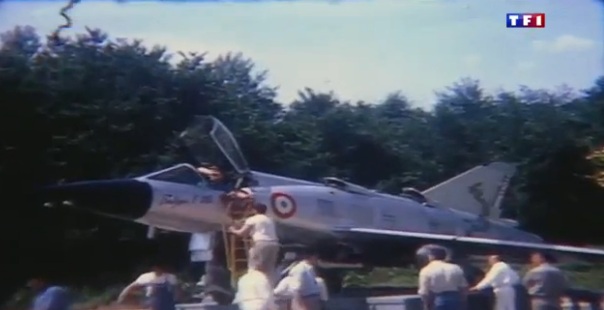
Just posted on YT is this video on the Mirage IV. Starting his career in the Mystere, François Dubreuil, first flew the Mirage IV in 1975 and by the time of his last flight on the type in 1987 had accumulated nearly 2000 hours of flight time on the Mirage IV. Dubreuil knows this plane like the back of his hand and shares his 10 years of experience at the controls with us. Walking around the Mirage IV P number 11, François details its technical particularities - in-flight refueling, JATO takeoffs, the operation of the electric flight controls, the bombing profiles and the progress of a war mission....in the event that deterrence has failed.

Thursday, 3 August 2023
Mirage IV personal accounts


Ian Powell photos
If you can read French, former Armée de l'Air aviator Jean Houben has put together a site full of first person accounts from French airmen. The Mirage IV was an aircraft capable of staying in the air for up to 15 hours at a time but which had a number of shortcomings. In "pipi room du Mirage IV" a former Mirage IV pilot describes the battle its pilots had with Dassault engineers to get some form of (necessarily) heated relief tube installed into the aircraft - pee freezes at -56° at subsonic speeds. Dassault said the equipment for this one function was far too costly and given the proximity of the radar and the radio altimeter to the 'outlet' were reluctant to incorporate one in the aircraft. Although a solution was eventually found there was no provision for the Mirage IV to be piloted by a lady pilot.
http://aviateurs.e-monsite.com/pages/1946-et-annees-suivantes/pipi-room.html
Monday, 9 April 2018
Docavia Mirage IV - Le bombardier strategique. Recommended Aviation books #39

This 367-page hardback published in 2003 is another book that I would like to own but probably never will. As advertised by Rich Carrick and sold by him on ebay.
" ..Superb volume! Highly detailed and complete down to the smallest detail. In short, a reference book for all aviation enthusiasts! Many rare photographs - absolutely fantastic reference for modellers and aviation fans. Naturally, the book is entirely in French, but if you have a basic understanding of the language you should be fine. The photos speak for themselves. There are also detailed scale plans. Very hard to find, even in France, and can command huge prices!.."


Monday, 25 December 2017
Iraqi Mirage F.1 EQ 5s over Baghdad - Recommended Aviation books
Ahead of Tom Cooper's " Iraqi Mirages " due next year, former Dassault Technician and French-expat in Mossoul during the Iraq-Iran war, Jean-Louis Bernard, has published his 'Heroes of Baghdad' detailing the exploits and service of the Mirage F.1 in Iraqi Air Force service. Coincidentally the January 2018 issue of 'Le Fana de l'Aviation' starts a four-part series on the same subject and features accounts from Saddam's Mirage pilots in the petrol tanker war against Iran..

By late 1983 the Iraq-Iran war is in its third year and has reached virtual stalemate. The Iraqis understand that they will have to change their strategy if they are to make any headway against the Iranians and decide to up their war against the Iranian economy. During October 1984 the Iraqis take delivery of the latest variant of the Mirage F.1 - the Exocet-capable EQ5, an aircraft that has the capabilities to lead this 'new' offensive. The new aircraft are brought together as Squadron '81' on the air base at Qayarah south of Mossoul. This new book relates the missions and events that comprise the history of this notable Mirage unit.
the author's blog is here
More at http://www.editions-jpo.com


from the 14 May 1988 edition of the New York times;
 ".. Iraqi planes bombed an offshore terminal in the Strait of Hormuz today and set fire to five tankers, including two of the world's largest, in a stepped-up drive to destroy Iran's oil lifeline.
At least 16 crew members were reported missing.
One of the ships, the 235,000-ton Spanish tanker Barcelona, was said to be sinking. Two others, including the Seawise Giant, at 564,739 tons the largest vessel afloat, were blazing out of control hours after the mid-afternoon raid on the Larak Island oil terminal, shipping officials said. Gulf-based contacts said Iranian salvage tugs were fighting fires on the ships, some of which were moored together to transfer cargo.
Iraq announced the raid five hours later, the 10th attack it says it has made against Iranian oil targets since April 29.
To reach the Strait of Hormuz, the Iraqi jets flew more than 750 miles each way, requiring mid-air refueling en route.
Reports of casualties varied widely. ... More than 500 ships have been damaged in the Iran-Iraq war, most of them since the fighting spilled into Persian Gulf lanes in 1984. Estimates by maritime agencies and other sources indicate that more than 300 seamen have been killed in the fighting, which has become known as the ''tanker war.''
The attacks were part of an intensified effort by Baghdad to cut off the export revenues that Teheran uses to finance the war against Iraq.
The raid was the third in the last seven months against Larak, where international tankers pick up oil cargos brought from Kharg Island by Iranian ships. Five tankers were hit in the last Larak raid, on Dec. 22 - among them the Seawise Giant, which was damaged in the first raid last October.
Both the Seawise Giant and the Burmah Endeavor, also one of the world's five largest vessels, are under charter to Iran as ''mother ships,'' or offshore storage tankers, at Larak.
Most of the attacks have been against tankers owned or chartered by Iran, which must use the Persian Gulf sea lanes to export its oil...."
".. Iraqi planes bombed an offshore terminal in the Strait of Hormuz today and set fire to five tankers, including two of the world's largest, in a stepped-up drive to destroy Iran's oil lifeline.
At least 16 crew members were reported missing.
One of the ships, the 235,000-ton Spanish tanker Barcelona, was said to be sinking. Two others, including the Seawise Giant, at 564,739 tons the largest vessel afloat, were blazing out of control hours after the mid-afternoon raid on the Larak Island oil terminal, shipping officials said. Gulf-based contacts said Iranian salvage tugs were fighting fires on the ships, some of which were moored together to transfer cargo.
Iraq announced the raid five hours later, the 10th attack it says it has made against Iranian oil targets since April 29.
To reach the Strait of Hormuz, the Iraqi jets flew more than 750 miles each way, requiring mid-air refueling en route.
Reports of casualties varied widely. ... More than 500 ships have been damaged in the Iran-Iraq war, most of them since the fighting spilled into Persian Gulf lanes in 1984. Estimates by maritime agencies and other sources indicate that more than 300 seamen have been killed in the fighting, which has become known as the ''tanker war.''
The attacks were part of an intensified effort by Baghdad to cut off the export revenues that Teheran uses to finance the war against Iraq.
The raid was the third in the last seven months against Larak, where international tankers pick up oil cargos brought from Kharg Island by Iranian ships. Five tankers were hit in the last Larak raid, on Dec. 22 - among them the Seawise Giant, which was damaged in the first raid last October.
Both the Seawise Giant and the Burmah Endeavor, also one of the world's five largest vessels, are under charter to Iran as ''mother ships,'' or offshore storage tankers, at Larak.
Most of the attacks have been against tankers owned or chartered by Iran, which must use the Persian Gulf sea lanes to export its oil...."
Sunday, 24 December 2017
Jean Copponex " Pilote de combat au temps de la guerre froide - Combat Pilot in the Cold War" - personal account from a Mirage IV pilot
 Jean Copponnex flew both the Mirage III and IV during the Cold War with the Escadron de Bombardement 3/94 'Arbois'. During September 1973 a detachment of three Mirage IV A nuclear bombers are in Solenzara, Corsica, for their annual training week practising high speed low altitude weapons delivery - crews were tasked to drop one mock-up AN 22 nuclear free-fall bomb using the LADD (Low Angle Drogue Delivery) procedure, releasing the bomb while pulling up from low altitude to roll out and down and accelerate at high speed away from the drop zone while the bomb itself is braked by parachute. With a TOW of some 25 tonnes (10 tonnes of fuel) Copponnex gets airborne on the afternoon of Wednesday 26 September 1973 in 'clean' ('lisse') configuration (no drop tanks). During his second approach run he experiences an engine failure at well over Mach 1 off the coast of Corsica. The aircraft quickly becomes unrecoverable and less than two minutes after the first 'oil 1' warning light flashes up on the dashboard and stays lit, both pilot and navigator have ejected from their aircraft - Mirage IVA n°2 AA. An interesting account...
".. I informed 'Jack', my navigator, of the failure, and applied my procedure which was very straight forward and clear-cut - throttle back the defective engine (to avoid any possible further deterioration) and go to full throttle on the other while radioing in our problem. While infrequent, this type of failure was not unknown and we trained for it of course. Now we had to get the aircraft back to the airfield - we were at low altitude and high speed some five nautical miles from home...the only manoeuvre possible to accomplish this was a wide starboard turn while climbing to just below the cloud base - there was no question of losing visual with the ground - while slowing to 250 kts to prepare for landing.. ..however I was suddenly unable to light the after-burner on the starboard engine. Our speed continued to fall away ..alarmingly. Checking the fuel circuit I twice -tried - to relight the afterburner in the starboard engine ...while letting out a 'ca merde!' ( " its going tits up!"). Nor could I relight the port engine that I had just shut down. At 600 ft and 300 kts, we were reaching the limit of the capabilities of our Martin Baker seats. I ordered the ejection. Two minutes had past since the first alarm. Immediately the navigator's seat 'took off' leaving me free to pull the lower handle. While not an 'emergency' at the outset, subsequent and successive failures demanded a quick and clear decision. I had Jack to thank for acting quickly and unhesitatingly. I had barely shouted out 'jump' than I heard the explosions detonating the canopy glazing and the two cannon 'shots' propelling his seat out of the fuselage. He told me later that he already had his hand on the handle as he heard me let out my expletive - had he hesitated, I'm not sure that I would have had time to jump in turn..at moments like that you can't afford to ask yourself, 'have I done the right thing?', 'where have I gone wrong?' or even, 'I'm going to have account for my actions here'. Too many pilots haven't had the good fortune to act quickly, preferring to stay with their aircraft, hesitating over or delaying a decision. For a pilot, carrying out an ejection is anything but a 'normal' decision. - you take off, you bring the aircraft safely back to terra firma... As I drifted down under the canopy that had safely deployed, I was treated to the breath-taking spectacle of 'my aircraft' plunging into the sea in an enormous fountain of spray.."

More Armee de l'air pilot accounts on this blog;
"JAGUAR SUR AL JABER" by Alain Mahagne, former Jaguar pilot of EC 2/11 Vosges, the only French pilot to be injured on operations in the first Gulf Air War, Jaguar sur Al Jaber is a 127-page account of flying the Jaguar in combat. Mahagne describes his sortie flown on 17 January 1991.
Wednesday, 13 July 2016
final displays of the Lafayette Ramex Delta Mirage 2000N display team RIAT 2016 -superb RIAT 2016 (4)
..aside from the F-35 Lightning II and the F-22 Raptor one of the most popular items at RIAT 2016 was almost certainly the French Air Force Lafayette squadron Ramex Delta Mirage 2000N duo. Sunday 10 July saw their last ever display. I was lucky enough to watch them on the Thursday rehearse and the Friday show..


above; Nico Charpentier pic


Above; credit Rob Yates


Monday, 27 June 2016
Belgian Air Force Air show weekend 25-26 June Florennes by Nico Charpentier
just a few images from Nico from an intermittently damp weekend in Florennes, Belgium featuring the Polish MiG 29 More on his FB page here


Saturday, 16 April 2016
Jet bombers, Edwards AFB and St. Dizier


Friday, 19 June 2015
Jean-Marie Saget - greatest living French test pilot - Dassault, Alphajet


On the occasion of the 2015 edition of the Paris Air Show ('Salon Aéronautique du Bourget') French TV news devoted three minutes to the life and career of French test pilot Jean-Marie Saget - the 'Eric Winkle Brown' of French aviation. At 86 years old and with more than 20,000 hours in his logbooks and more than 150 aircraft types flown, this veteran is still flying and instructing in aerobatics three times per week at the controls of his CAP 10.
Jean Marie Saget enlisted in the Armée de l'Air in 1949 and served as an Officer Pilot with the EC II/2 AT Dijon, flying Vampire and Ouragan jets.. In 1954 he won an air race between Paris and Cannes flying an Ouragan. In 1955 he left the air force after being invited by aircraft designer Marcel Dassault to become a test pilot with Dassault aviation, with whom he worked until 1989. He survived at least one ejection and in 1978 was hospitalised for three months after crash-landing his Alphajet in a minefield following an engine flame-out over Cairo.


During his time with Dassault, he flew all the aircraft produced by the company and was involved in various programmes including the VTOL Mirage Balzac 001 (III V), the first to use a composite power plant for VTOL and supersonic horizontal flight. Other programmes that Saget worked on included the Etendard M, Mirage III, Mirage F1,Mirage G-8, Alphajet and Mirage 4000, the Falcon jet family and the Breguet Atlantic.
VTOL 'Balzac' intended forerunner of the Mirage III V supersonic VTOL aircraft


More on the 'Balzac' at the 'Flight International' archive
http://www.flightglobal.com/pdfarchive/view/1962/1962%20-%201348.html
Jean-Marie Saget made four first-of-type flights;
Etendard IVM on 21st May 1958
Mirage G-8 on 08 May 1971
Alphajet on 26 October 1973
Mirage 4000 on 9th March 1979
Below; Alphajet take off trials from a section of the Paris-Le Mans autoroute


Jean-Marie Saget at the Melun airshow 2008
See more French post-war test pilots on this blog - Jacques Guignard - from Spitfire to Concorde
http://falkeeinsgreatplanes.blogspot.co.uk/2013/12/jacques-guignard-from-spitfire-to-so.html
Friday, 18 January 2013
First Rafale sorties of Operation Serval over Mali - RAF C-17 cargo drop, Mirage 2000 D detachment to Bamako

Rafale at N'Djamena airport, Chad
"...Air Force commanders had just 48 hours to prepare the first Rafale strike against jihadists in Mali and it was mission accomplished. The French Air Force made a big splash Sunday morning. "A perfect mission. Few air forces could have deployed such a strike force in such a short time " stated the Chief of Staff of the Air Force, Denis Mercier. Flying their first sorties under the umbrella of Operation Serval, Rafales destroyed a training camp, several storage depots and logistics buildings belonging to the Islamist group Mujao in Gao and Taoussa. Mission accomplished. Preparing the first Rafale sorties took all resources of the Air Force over a 48-hour period..On Friday morning, ahead of the decisions being taken at political level, the staff of the Air Force started to bring to readiness all its Rafale bases, ie Al Dhafra in the UAE, Mont-de-Marsan and Saint-Dizier. By late evening, a strike against jihadist bases was decided. It was to be flown from air base 113, Saint-Dizier. Shortly before midnight, the type of strike to be flown was confirmed. All day Saturday was spent equipping and arming four Rafales at Saint-Dizier. A further two aircraft from Mont-de-Marsan were added to the strike force as eventual replacements in case of possible technical problems with the Saint-Dizier aircraft. On Saturday afternoon the pace quickened. At around 13h00 the pilots were briefed on the first four targets. They prepared the sortie using images of the targets taken by Atlantique 2 reconnaissance machines and by the Pleiades satellite system . The pilots studied their flightplans, selected their weapons. At around 6 pm the decision was taken to schedule take off for 7 am the next morning. At 10 pm , two new targets were added. The pilots incorporated them into their mission on their return to the base after snatching four hours of rest. The time was then 3:30 am, Sunday morning. They would eventually get airborne at 7:30 am. The mission lasted 9 and a half hours in total. Five in-flight refuelings, provided by C 135 tankers were required and the aircraft landed at N'Djamena airport, Chad. Attacks on Gao were quick and made with successive waves of two aircraft. In Taoussa, the strategy is different: a "compressed" attack with the four planes together. The entire operation was followed live from the operational centre of Air Force Command in Paris and the national air operations centre in Lyons...."
My translation from http://www.lalsace.fr/actualite/2013/01/16/9-h-35-en-vol
Opération Serval - a detachment of three Mirage 2000 D fighters deployed for air cover of the Mali capital Bamako on 17 January...

https://www.facebook.com/armeefrancaise?ref=ts&fref=ts


latest update from the French Ministry of Defence web site
http://www.defense.gouv.fr/operations/mali/actualite/operation-serval-point-de-situation-du-19-janvier-2013
 " .....latest update 18-19 January...
Today aircraft deployed on Operation Serval are continuing their mission flying around ten sorties, of which half were flown by the fighter arm. Our aircraft are continuing to track the movements of terrorist groups while striking at identified ground targets in the region of Diabali..."
Du 18 janvier 18h, jusqu'au 19 janvier à 18h
Aujourd’hui, les avions de l’opération Serval ont poursuivi leurs missions avec une dizaine de sorties dont la moitié pour la chasse. Ils continuent de surveiller les mouvements des groupes terroristes tout en maintenant leurs frappes sur des cibles identifiées au sol dans la région de Diabali.
http://www.canada.com/Canadian+completes+first+cargo+drop+Mali/7839880/story.html
Canadian and RAF C-17s have completed their first cargo drops in Mali


Subscribe to:
Posts (Atom)
-
 Despite the nationalisations of the Front Populaire during the mid-1930s, French industry was still manufacturing fewer than 100 airc...
 -
 According to Russian site 'Kommersant' Russia and Algeria are holding closed negotiations on the purchase of a squadron of MiG-29 ...