Showing posts with label Prototypes and research aircraft. Show all posts

Sunday, 27 December 2020

A flame relit - the aeronautical industry in France 1944-1950- Le Fana Special issue - Leduc ramjets


Much has been written and said about the French Air Force in the years immediately before the Second World War, much of it inaccurate. However, whilst the valour of their pilots cannot be underestimated, like many other continental countries France was unprepared for war, and this unpreparedness showed up in the quality and quantity of aircraft available to their air force. The good types that the Armée de l'Air had were not available in sufficient numbers to make any difference, as like many other countries the aviation industry was organised almost on an 'artisan' basis, unable to switch rapidly to full-scale industrial production when the need arose. And political inertia and interference also meant that time and effort was expended on a number of types that were not suitable for their intended purpose. The French government of the day eventually recognised this, and nationalised the aviation industry in 1937; even then, it was not brought under full-scale state control, thus leaving the nation unprepared for the Blitzkrieg of 1940. France was far from atypical in this respect. It is also a fallacy to think that the French aircraft industry had been 'devastated' by German occupation - a notion that rather conveniently draws a veil over the extensive French collaboration that went on with the Germans, especially in the aeronautical field.

Following the defeat and subsequent armistice in June 1940 the Vichy French authorities had very quickly opened negotiations with their new German masters.  On the table was an offer to produce spares for German aircraft manufacturers and establish overhaul and repair facilities for aircraft operating from French territory and in so doing preserve industrial capacity in aviation and preserve employment and some of their manufacturing base in France. In making themselves useful to the Germans, they hoped to avoid all their workers being drafted east to work as 'Auslandarbeiter' in German aircraft factories. This offer was quickly taken up and led to the establishment of so-called Frontbetriebreparatur or FBR plants - advanced overhaul facilities. Junkers set up their FBR at Villacoublay south of Paris. With Ju 88s operating from no fewer than thirty eight aerodromes throughout France at the height of the Battle of Britain the French quickly gained a certain amount of expertise on this particular type. This was 'collaboration', albeit (one suspects and hopes) with a degree of nose-holding and possible tolerance of a degree of sabotage and back-pedalling, in the hope and expectation of better times to come. The Vichy Government thereafter concluded the so-called Wiesbaden Agreement with the Reich to bring the French aircraft industry fully into alignment with German production, with one aircraft or engine out of every three being retained for Vichy, the other two going to Germany. Certain types, such as the Messerschmitt Bf.108, Siebel Si.204 and Fiesler Fi.156 Storch were intended for wholesale transfer of their production to France. And indeed, even the Focke Wulf Fw 190 was intended for this move (and the post-war Armée de l'Air was briefly equipped with home-built Fw 190s, known as the NC.900). While some would argue that the French were not constructing war machines for the Germans, it is nonetheless the case that producing large numbers of transports and seaplanes enabled German industry to concentrate on fighters and other offensive weapons.

As the Germans were expelled from French territory during 1944, determined efforts got underway to re-establish the French aviation industry. As would be the case with other Allied nations, great interest was shown in all manner of weapons systems and aircraft produced by the aircraft manufacturers of the Third Reich. There was another motive for what was to follow - the parlous state of French industry and a total lack of foreign currency naturally led the French to want to seek to exploit the huge quantities of war materiel - spares, parts, tools and jigs - left behind by the retreating Germans. Their factories had produced hundreds of machines for the Germans (both German and French types, eg some 600 Caudron C.445 twins) and they had large stocks of German parts and equipment.

 Thus it was that in 1944, the Liberation saw a French aircraft industry ready to move quickly into full-scale production to help rebuild the economy. And as a member of the Allies, France shared in the uncovering of German high technology aviation - and quickly took advantage of that opportunity to quickly produce home-grown examples of the new and exciting jet aircraft. Most of the German types that the French produced were obsolete. In the meantime their 'German' equipment was cost-effective and usually of reasonable quality. These were the reasons that led to the decision to use the Jumo 213 to power the SO-8000 - the British Griffon was too expensive to be imported. The S.N.C.A.S.O. ejection seat came directly from Heinkel. The Me 208 was due to go into series production in France - it did post-war as the Nord 1100 Noralpha.

However in the immediate post-war environment the French were now much more interested in trying to catch up with the new jet and jet engine technologies in which they lagged way behind. They were soon testing examples of the Me 262, He 162, Me 163 and appropriating German materiel and scientists just as the other powers were doing. It was not long before their own outlandish designs were flying, eg SO 6020, 4000, 6000, SO M2. The Arsenal VB. 10 (below) first flew in July 1945.


 But the French penchant for "interesting" politics meant that this initial surge of innovation was quickly diluted as designers and factories turned out a bewildering variety of weird and wonderful shapes, both piston- and jet-engined. Some were successful; others were not. Some, like the Dassault MD.450 Ouragan, saw series production and service; others, like the Nord 1500 twin-engined torpedo bomber, were less successful - the Nord in part because its torpedo bay was too small for the torpedoes the French had access to at the time...


 This 'special edition' of the French magazine 'La Fana de l'Aviation' tells the story of the six years following liberation and the bewildering variety of aircraft the French industry turned out. In a changing world, the aviation industry everywhere had a hard time keeping up, and France was no exception.

First flight of the Leduc ramjet carried aloft on the SE Languedoc 'mother-ship'


The Leduc ramjet prototype could not take off unassisted (ramjets cannot produce thrust at zero airspeed and thus cannot move an aircraft from a standstill) and was therefore intended to be carried aloft by a parasite aircraft mother ship, such as the four-engined AAS 01A & -B German-origin designs or the French-designed Sud-Est Languedoc four-engined airliners, and released at altitude. Following test flights of the AAS 01/Leduc 0.10 composite, independent unpowered gliding tests began in October 1947. After three such flights, the first powered flight from atop an AAS 01 mother ship was made on 21 April 1949 over Toulouse. Released in a shallow dive at an altitude of 3,050 m (10,010 ft), the engine was tested at half power for twelve minutes, propelling the aircraft to 680 km/h (420 mph).

In subsequent tests, the 0.10 reached a top speed of Mach 0.85 and demonstrated the viability of the ramjet as an aviation powerplant, with a rate of climb of 40 m/s (7,900 ft/min) to 11,000 metres (36,000 ft), exceeding that of the best jet fighters of the time.
Of the two 0.10s originally built, one was destroyed in a crash in 1951 and the other severely damaged in another crash the following year. Both pilots survived with serious injuries.

Generally similar to the 0.10, the Leduc 0.11 featured a Turbomeca Marbore I turbojet on each wingtip, to provide better control during landings. This first flew on 8 February 1951, but was converted back to 0.10 standards (and thereafter referred to as Leduc 010 n°03) a few months later after problems occurred, including misting of the pilot's windows, powerplant synchronization, and wing deflection caused by the turbojets. The engines were replaced by inert mass balances. This aircraft flew 83 test flights and is preserved at Le Bourget.

Monday, 12 June 2017

Hawker P.1127 XP831 first flew in November 1960, Vickers Valiant prototype WB 210 - daily ebay photo find #61


Hawker P.1127 XP831. The first P.1127, XP831 first flew in November 1960. Currently preserved in the Science Museum.


On offer here

Below; Boulton Paul P.111 Experimental Aircraft - VT935


Below; Vickers Valiant prototype WB 210


Vickers Valiant - WB215 2nd prototype


here

Sunday, 21 June 2015

F-14 Tomcat swing-wing trials


Tomcat No. 3, with Grumman's Chief Test Pilot, Chuck Sewell, at the controls. During aircraft testing, several flights were flown with the right wing locked in the forward position of 20 degrees, and the left wing at 35, 50, 60 and 68 degrees of sweep in flight. Amazingly, it was discovered that in the event of an operational in-flight malfunction, the Tomcat would remain controllable enough for carrier landing in this configuration.


via www.Sierrahotel.net

Friday, 19 June 2015

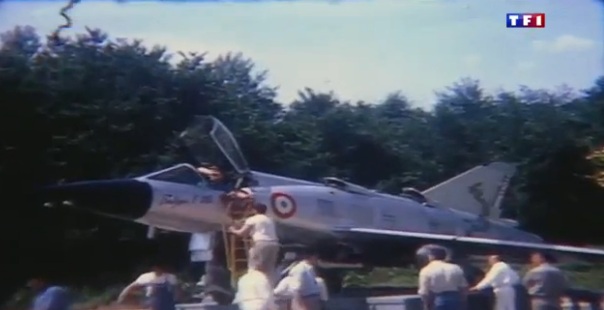
Jean-Marie Saget - greatest living French test pilot - Dassault, Alphajet


On the occasion of the 2015 edition of the Paris Air Show ('Salon Aéronautique du Bourget') French TV news devoted three minutes to the life and career of French test pilot Jean-Marie Saget - the 'Eric Winkle Brown' of French aviation. At 86 years old and with more than 20,000 hours in his logbooks and more than 150 aircraft types flown, this veteran is still flying and instructing in aerobatics three times per week at the controls of his CAP 10.

 Jean Marie Saget enlisted in the Armée de l'Air in 1949 and served as an Officer Pilot with the EC II/2 AT Dijon, flying Vampire and Ouragan jets.. In 1954 he won an air race between Paris and Cannes flying an Ouragan. In 1955 he left the air force after being invited by aircraft designer Marcel Dassault to become a test pilot with Dassault aviation, with whom he worked until 1989. He survived at least one ejection and in 1978 was hospitalised for three months after crash-landing his Alphajet in a minefield following an engine flame-out over Cairo.


During his time with Dassault, he flew all the aircraft produced by the company and was involved in various programmes including the VTOL Mirage Balzac 001 (III V), the first to use a composite power plant for VTOL and supersonic horizontal flight. Other programmes that Saget worked on included the Etendard M, Mirage III,  Mirage F1,Mirage G-8, Alphajet and Mirage 4000, the Falcon jet family and the Breguet Atlantic.

VTOL 'Balzac' intended forerunner of the Mirage III V supersonic VTOL aircraft


 More on the 'Balzac' at the 'Flight International' archive
http://www.flightglobal.com/pdfarchive/view/1962/1962%20-%201348.html


Jean-Marie Saget made four first-of-type flights;

 Etendard IVM on 21st May 1958
 Mirage G-8 on 08 May 1971
 Alphajet on 26 October 1973
 Mirage 4000 on 9th March 1979

Below; Alphajet take off trials from a section of the Paris-Le Mans autoroute


Jean-Marie Saget at the Melun airshow 2008


See more French post-war test pilots on this blog - Jacques Guignard - from Spitfire to Concorde

http://falkeeinsgreatplanes.blogspot.co.uk/2013/12/jacques-guignard-from-spitfire-to-so.html

Monday, 25 May 2015

"Tex" Johnston barrel rolls the B707 Dash 80 prototype - Jet age - Recommended Aviation books #29


Bill Allen; "what did you think you were doing ?!!"
Tex Johnston; "selling airplanes!"

As part of the Dash 80s demonstration program, Bill Allen invited representatives of the Aircraft Industries Association and International Air Transport Association to the Seattle's 1955 Seafair and Gold Cup Hydroplane Races held on Lake Washington on August 6, 1955. The Dash-80 was scheduled to perform a simple flyover, but Boeing test pilot Alvin "Tex" Johnston instead performed a barrel roll to show off the jet airliner. The next day, Allen summoned Johnston to his office and told him not to perform such a maneuver again, Johnston's explanations that this was a safe 1G manoeuvre assertion that doing so was completely safe. Boeing Chief Test Pilot John Cashman stated that just before he piloted the maiden flight of the Boeing 777 on June 12, 1994, his last instructions from then Boeing President Phil Condit were "No rolls"
A single click to view here


 Review of the 'Jet Age' by William Holmes


 .. The central narrative about the competition between Britain and America is clear from the subtitle, "The Comet, the 707 and The Race to Shrink the World." The British were the first to test a commercial airliner, the de Havilland Comet, in 1949. British Overseas Airway Corporation (BOAC) assigned the new aircraft to its Empire Service, and it began carrying paying passengers on regularly scheduled flights in May 1952. The American airline industry was satisfied with big, noisy, turbulent, uncomfortable propeller-driven aircraft--Boeing was the only manufacturer willing to bet the company on jet air travel, and its Dash 80 (the prototype of the famous 707) was years behind the Comet. The book is first and foremost about the race between de Havilland and Boeing, told from the perspective of national pride. From there, the story branches out in myriad directions. A second narrative summarizes the life and achievements of Geoffrey de Havilland, who endured personal tragedy (including the deaths of two of his three sons in company aircraft) to lead Britain into the jet age. The Americans in the story include Bill Boeing, who founded the eponymous company but left the airline industry in disgust in 1934 when the Roosevelt Adminstration broke his company into an aircraft manufacturer (Boeing Company), an airline (Boeing Air Transport, now United Airlines), and an engine manufacturer (today's United Technologies); Bill Allen, who bet the company on the 707 and later on the even larger 747; Howard Hughes (TWA), Eddie Rickenbacker (Eastern), and Juan Trippe (Pan Am), the leaders of the airlines who would decide whether the 707, the Douglas DC-8, or the Comet won the race to become the dominant aircraft of the jet age; and Tex Johnston, the Boeing test pilot and salesman-in-chief who famously barrel-rolled the Dash 80--twice--in a demonstration flight above Lake Washington in Seattle. The Comet was first out of the gate but turned out to be an aircraft too far ahead of its time--a fatal structural flaw caused by metal fatigure sometimes without warning caused the jetliner to disentegrate in the upper atmosphere, leading in 1952-53 to three mysterious high-altitude disasters that killed over 100 people. Part of Verhovek's story is about how the British swallowed their considerable national pride, grounded the Comet, and figured out what had gone wrong. Boeing learned from these tragic lessons and designed the 707 with a fuselage able to withstand a "guillotine test" without shredding. To tell the story of the "race to shrink the world," Verhovek disgresses to a number of interesting subtopics, including Boeing's invention of "the stewardess," (who was at first required to be an unmarried registered nurse), the first encounter between a British Mosquito and Germany's Me262 jet fighter near the end of World War II, the establishment of the American air mail industry, and the growth of commercial airlines in the United States in the 1930s. It's clear that Verhovek has a lot of passion for his subject and has taken the time to master its many interesting facets--it's as if Simon Winchester decided that he wanted to write about the aircraft. The result is a very readable book that I highly recommend.

Friday, 14 November 2014

Captured enemy aircraft at the Farnborough exhibition October/November 1945 - Martin Baker M.B. 5


Veteran aviation author, diarist and commentator Mike Bowyer is presenting a talk on the Farnborough 1945 exhibition at the RAeS on Monday 17 November. Open to the public in October and November 1945 the RAF displayed its captured aircraft and many British prototypes then undergoing evaluation during late 1945. Inspired by an article in the September 2010 issue of Aeroplane magazine here are some period images of the exhibition and some excerpts from Flight's coverage of November 1945, taken from the amazing flightglobal pdf archive!


Back row left to right: Ju 290, Ju 52/3, Ju 352, a Fw 200 and a Do 17. A Ju 88 Mistel combination can just be discerned right at the back. In the second row are the following;  Si 204, Ju 88 G, Fi 103 manned V-1, Ju 388, He 219. Third row: Me 410 (maybe 210...), Bf 110 G, Do 335 B (probably the B-12 trainer), Ta 152, Fw 190 A, Ar 234, and Me 262. Final row: Supermarine Spiteful, Martin-Baker MB 5, Blackburn Firebrand, Bristol Brigand, Fairey Firefly, Fairey Spearfish, Meteor and a couple of late-mark Spitfire tails.


Wednesday, 16 July 2014

" Britain's Greatest Pilot " - Captain Eric 'Winkle' Brown documentary on BBC 2


Britain's Greatest Pilot - The Story of Captain Eric "Winkle" Brown. Captain Eric 'Winkle' Brown recounts his flying experiences, encounters with the Nazis and other adventures leading up to and during the Second World War. Illustrated with archive footage and Captain Brown's own photos.

The recent BBC 2 documentary devoted to Captain Eric 'Winkle' Brown was an absolutely fascinating programme. Brown must rate as one of aviation's leading test pilots of all time, a man who was there at the forefront of the development of aircraft from biplanes to supersonic jets. With his love for danger -   as a teenager he enjoyed earning some spare cash as a wall-of-death motorcycle rider- and having a father who had been a WW I fighter pilot - Brown's love affair with flight began in 1936 when he was taken up on an aerobatic joy-ride by German WW I ace Ernst Udet who made him promise " to learn to speak German and learn to fly.. it was a pivotal point in my life ".


Much of the programme was taken up with 'Winkle' Brown's subsequent dealings with the Nazis, from his own early imprisonment in Munich on the outbreak of WW II to his interrogation of Luftwaffe chief Goering, test flying the Luftwaffe's jet and rocket aircraft to 'liberating' Belsen concentration camp and interrogating the notorious camp Kommandant Franz Kramer and Kramer's 'deputy' Irma Grese " the most evil person I've ever met ". Brown's war started as a Fleet Air Arm fighter pilot flying Martlets (Wildcats) deployed on HMS Audacity which had a terrifyingly short flight deck and carried six aircraft..


Audacity (above) was a 'flat-topped former German 'banana boat' converted for Atlantic convoy escort duties protecting against bomber attack from the "Focke Wulf Kurier" (sic) or Condor, the most heavily armed German aircraft in the sky.." Audacity was torpedoed and sunk and Brown and twenty-four of his ship-mates were left for dead- only Brown and one other survived. Audacity's captain had already noted Brown's competence at carrier landings and reported this fact to his superiors, which marked Brown for some highly dangerous test flying ...

 Brown was the first man to land a twin-engine aircraft (a Mosquito)on a carrier and as a result became the chief naval test pilot at RAE Farnborough for the Fleet Air Arm.


He flew a world record 2,400 carrier landings, probably flew more types of aircraft than any other pilot, was the only Allied pilot to fly the rocket-powered Me 163 and als flew the Me 262.

Post-war he was the first man to land a jet on a carrier. The clip depicts Brown's first landing of a jet powered aircraft on aircraft carrier. "..The music is excellent. I feel slightly emotional watching it. I love the part about warming hands in front of the jet especially..."Where does the urge come from? Feeling's believing."


'Winkle' Brown was a test pilot as aerodynamics moved from bi planes to supersonic fighters - indeed supersonic flight was the 'holy grail' of aviation during this period. Brown was tasked with ascertaining why Geoffrey de Havilland died at the controls of the tail-less Dh 108 Swallow as it was attempting a new world air speed record.


The only shortcoming of the documentary was possibly the fact that it was an impossible task to condense this man's life into a one hour programme. Three hours and they may have done the man justice. I enjoyed his comment about Geoffrey De Havilland "..a Hollywood test pilot"; few people living or dead would have said that about him.

What he did as a pilot very few - if any - have equalled. not only for the 487 types flown (!). From interrogating Goering, flying as a young lad with WW1's second highest scoring ace Udet AND then testing the Luftwaffe's most advanced planes...and ending his career on the Buccaneer nuclear strike bomber.


Friday, 13 December 2013

abgeschossener Engländer! Spitfire IIa 'YQ-D' P8500 of 616 Sqn - Missing 6.7.41. Sgt James McCairns Sq/Ldr. Geoff Stephenson N0. 19 Squadron Spitfire Mk 1a, Kurt Tank's Pulqui II Ebay photo finds #22


abgeschossener Engländer!  Another selection of ebay finds. Spitfire 'YQ-D' from 616 Squadron, Manston, probably along the Channel coast during the early summer of 1941, a Caproni Ca 133, a Bloch 155 and a couple of rare views of Kurt Tank and his Pulqui (a development of the Ta 183) in Argentine roundels..


Spitfire IIa 'YQ-D' P8500 - Missing 6.7.41. Sgt Jim McCairns crash landed his aircraft in a field at Gravelines near Dunkirk on 6.7.41. He was injured and became a POW. He escaped fron Stalag IXC and returned to England via Spain.  Below; 6 July 1941 P8500 YQ-D of 616 Sqn, Sgt James McCairns POW..


26 May 1940- a No.19 Squadron Spitfire I N3200 flown by Sq/Ldr. Geoff Stephenson shot down on the beach at Dunkirk. Stephenson was taken prisoner. The aircraft coded 'QV-' was shot down in combat and forced landed on the beach at Dunkirk. Pre-war Stephenson was a member of the R.A.F. aerobatic team, Squadron Leader of 19 Squadron, (Duxford) and was shot down over Dunkirk covering the evacuation. He spent the war in a number of German prison camps, making many escape attempts, and eventually was sent to Colditz Castle in Poland, the ultimate high security German prisoner of war camp. He was part of the team that built the famous Colditz glider. (In the 1930's, Stephenson was the first person to fly a glider across the English Channel.) He was also personal pilot to King George VI. He was killed on the 8th November 1954 whilst test flying a F-100A-10-NA Super Sabre of the U.S.A.F. at Eglin Air Force Base.  The aircraft went out of control and crashed before he could eject. http://www.ebay.de/itm/2WK-Foto-BRITISCHE-RAF-SPITFIRE-JAGDFLUGZEUG-NAHE-DUNKIRCHEN-1C161-/201003231130

Below;  Caproni Ca 133


 http://www.ebay.de/itm/Hammer-tarn-Camo-Flugzeug-Beute-Foto-/380787115785

Below;  Bloch 155


http://www.ebay.de/itm/Foto-Beute-B-17-Flugzeug-Me-109-Reichsverteidigung-/171190854881?nma=true&si=0pwoGYb%252F%252Fdahp2y9V%252B8EA5M2OvM%253D&orig_cvip=true&rt=nc&_trksid=p2047675.l2557


Kurt Tank (on the boarding ladder by the cockpit) and his Pulqui (a development of the Ta 183) in Argentine roundels..


any similarity to the MiG 15/17 series is purely coincidental